When I joined the company I now work for in 2007, I was immediately sent on a trip to visit two development financial institutions we were supporting in India and Cambodia. I flew to Hyderabad, India and was taken about 3 hours outside of the city to meet some of the bank’s clients. The first stop was at a village that had banded together into a cooperative to take their textiles to market and have enough bargaining power to get a higher price. Profits were used to buy more sophisticated looms that could produce larger quantities. However, for special textiles such as saris for weddings, the artisans in the village still used hand looms like the one shown below. 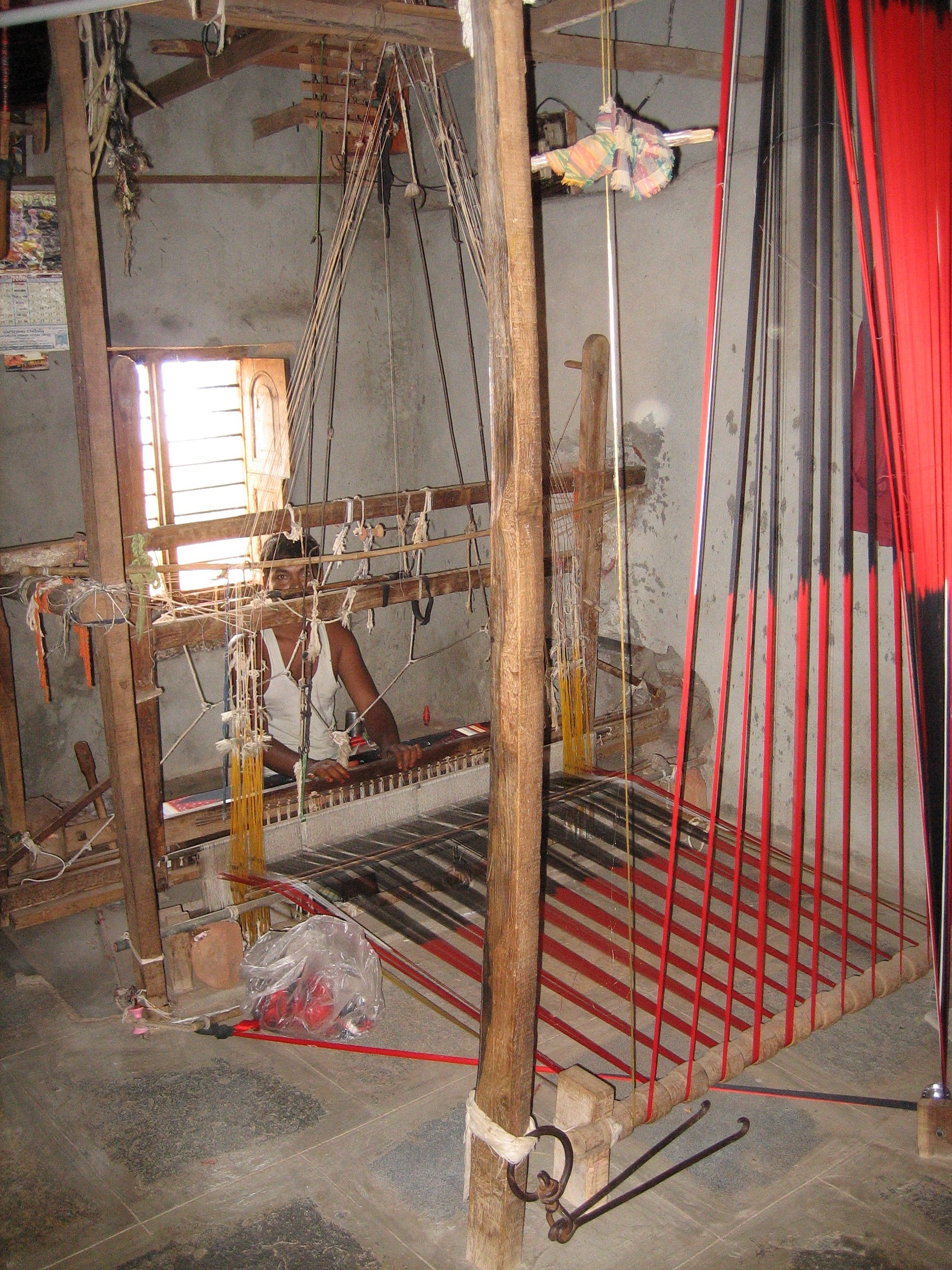
The next place we stopped was a rice paddy where the institution we worked with had developed a partnership with a local university to disseminate best practice information for raising various crops. For rice, they had helped to identify and import a strain that required 2/3rds less water than a normal rice strain. This was particulary pertinent in India where drouts have been a consistent problem. The photo here shows a rice paddy nearly up to the unit manager’s waist. The next paddy over had been planted with a regular rice strain and the growth barely came up to our calves. 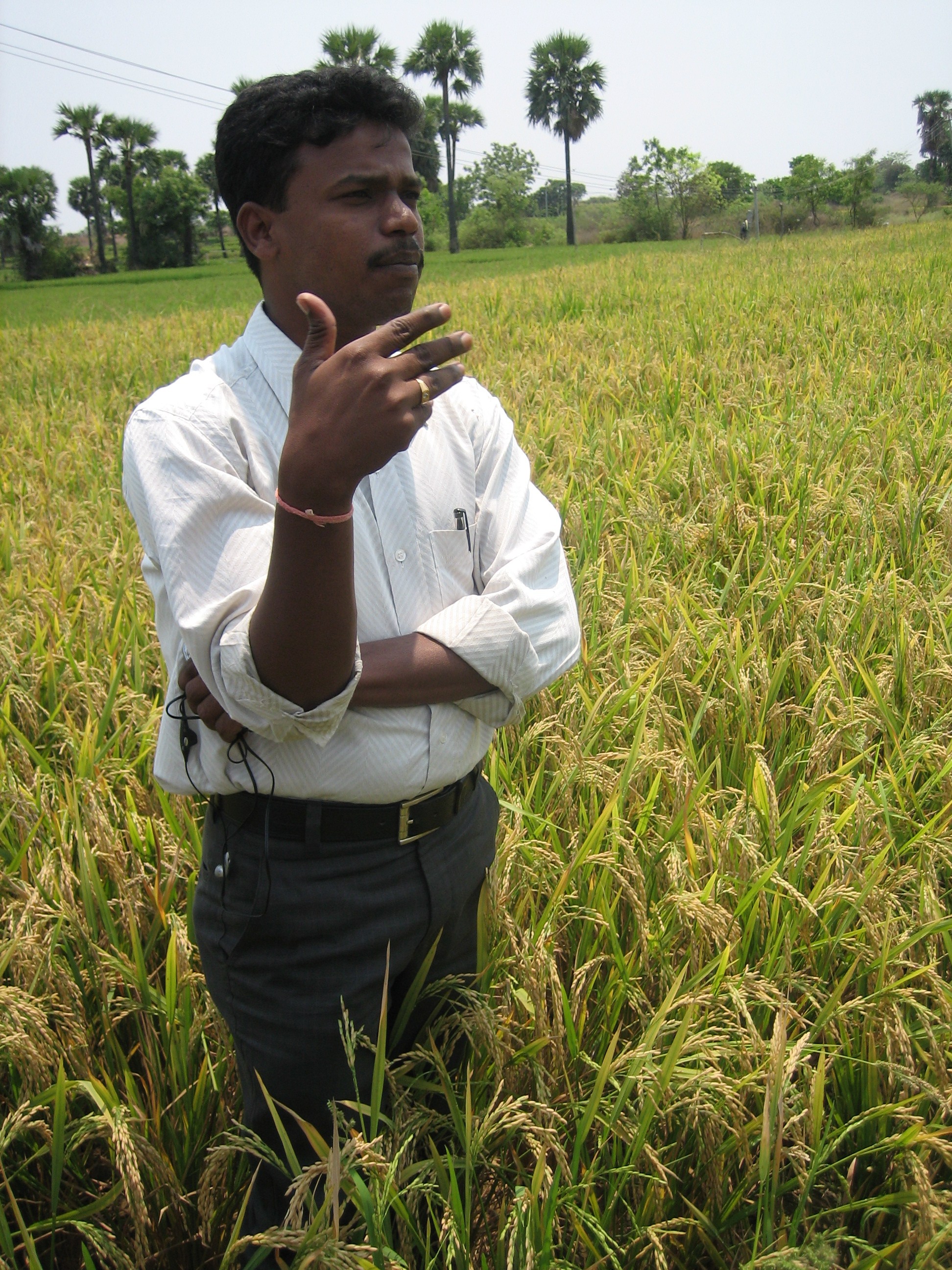
The last stop was at a small village that boasted one general store and a telephone. The woman running the shop had received a loan from our partner institution and used it to buy additional goods for her store. In addition, she purchased a telephone which people in the village could come and use for a fee (the yellow box at the bottom right of the picture). You’ll also notice bottles of water in front of the store. Unfortunately, this village suffers from the same challenge that affects many developing countries around the world – lack of access to clean water. Most of the town’s inhabitants purchased their water from this store. 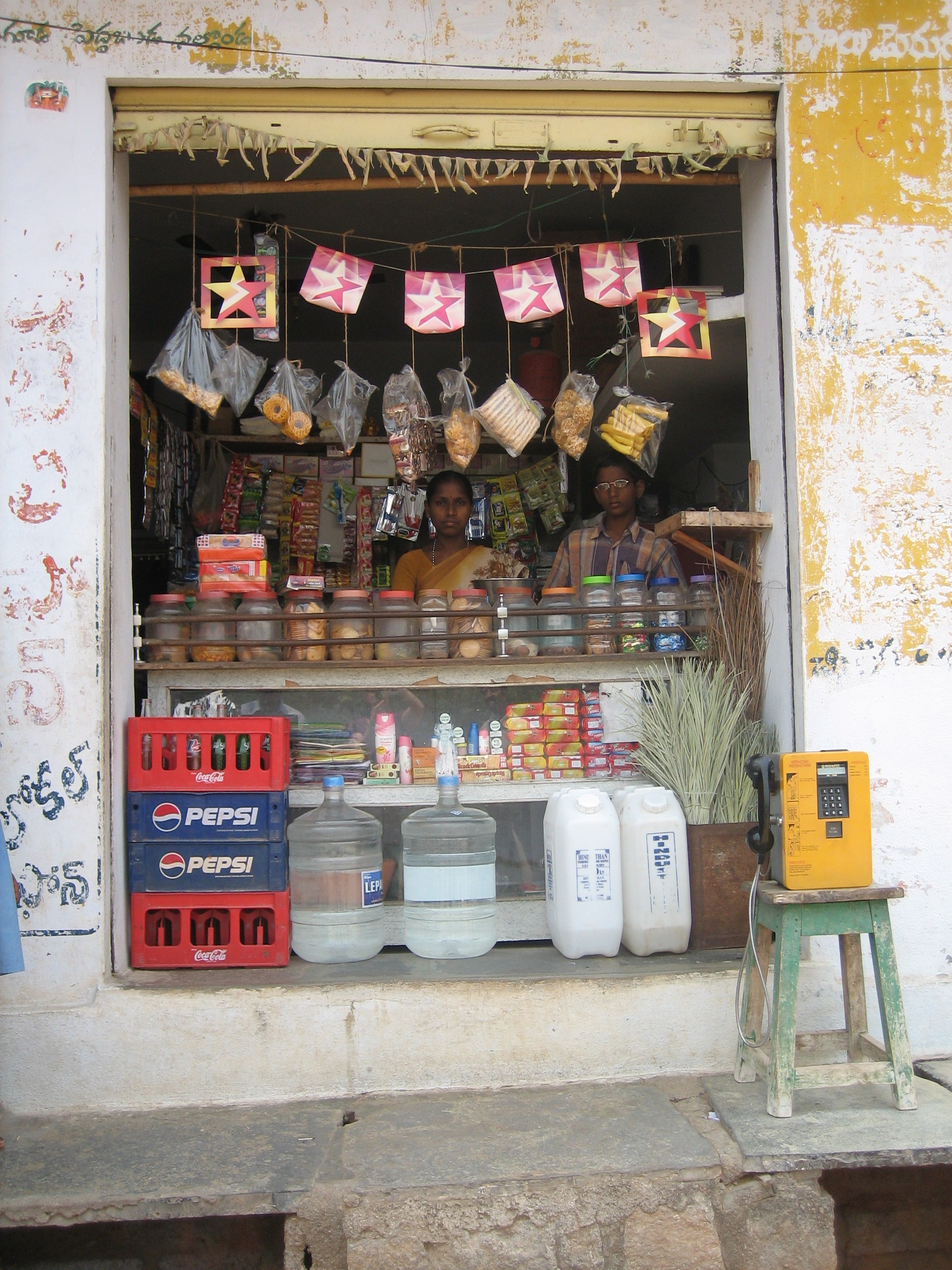
 Purposeful Traveler